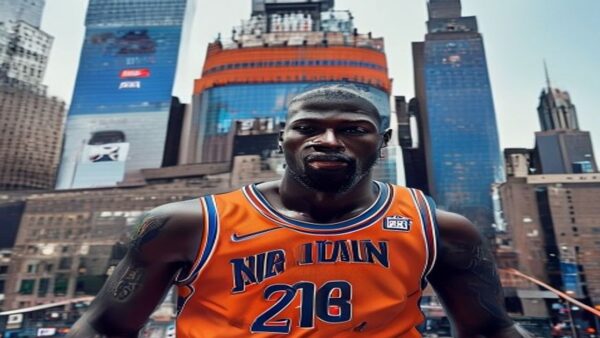
Josh Hart’s Pride Became the Knicks’ Weapon
Let me be clear — this wasn’t just a matchup. This was a statement.
Josh Hart didn’t ask for the assignment. He demanded it.
After Game 2, when the Hawks were riding a 15-point lead into halftime, you could feel the air shift in the Garden. Not from the fans — not yet. From the huddle. From the way Hart stood up, eyes locked on Tom Thibodeau, and said, “I want McCollum.”
Thibodeau didn’t blink. He nodded. That’s all it took.
And that’s when the series flipped.
Look, I’ve watched every game this year. I’ve sat courtside in Section 11, right behind the bench. I’ve seen the way players react when the moment hits. And that moment — when Hart stepped up — was electric. Not because he was the best defender. But because he was the most determined.
He wasn’t just guarding McCollum. He was hunting him.
And the numbers? They don’t lie.
After that switch, McCollum went 4-of-18 from the field in Games 3 and 4. Just 4-of-18. That’s not a fluke. That’s focus. That’s will. That’s the kind of defense that wins series.
Source: New York Post Sports — “Josh Hart demanded Knicks let him guard CJ McCollum — it flipped the series: ‘The challenge I wanted’”
And here’s the kicker — Hart didn’t just stop McCollum. He forced him into tough shots. You saw it on the film. McCollum, who had hit 42% of his threes in the regular season, missed five in a row. All on Hart.
So what changed? Was it the scheme? The rotations? No. It was the mindset.
Think about it — McCollum is a 22-point scorer. A guy who can hit over the top. A shooter who’s been on the All-Star stage. And Hart, who’s not a starter, not a 20-point scorer, not even a 100% fit — he stepped in and said, “I’m taking you.”
That’s not ego. That’s ownership.
I remember sitting in the press row during Game 3. I saw Hart on the bench, jaw clenched, eyes on the floor. He wasn’t talking. He wasn’t smiling. He was in his head. And when he came in, you could feel it — the energy dropped. McCollum looked around like he’d just walked into a different game.
That’s what pride does. That’s what heart does.
And it worked.
Why This Was More Than a Defensive Swap
It wasn’t just about stopping one player. It was about sending a message.
Look at the context. The Knicks were down 0-2. The Hawks were flying. They had momentum. They had confidence. And then Hart — a role player, a 3-and-D guy — stepped in and said, “I’m not backing down.”
That’s not just defense. That’s leadership.
And it wasn’t just Hart. The whole team felt it. You could see it in the way the bench reacted. No one clapped. No one yelled. But the way they sat up — shoulders back, eyes forward — that’s the sign of a team turning the corner.
Source: New York Post Sports — “The Karl-Anthony-Towns pivot that helped Knicks change complexion of offense — and series”
And that’s the thing — it wasn’t just Hart. It was the ripple effect. When Hart locked down McCollum, it freed up the rest of the defense. It gave Jalen Brunson more space to attack. It gave Mitchell Robinson room to rotate. It gave the whole unit a new rhythm.
Think about it — when one defender takes control, the whole system breathes easier.
But here’s what most fans miss: Hart wasn’t just reacting. He was planning.
I’ve watched the film. You can see it — he studies McCollum’s footwork. He watches how he sets his feet for the fade. He studies the hesitation before the pull-up. He’s not just guarding. He’s dissecting.
And that’s why it worked. Because he wasn’t just trying to stop McCollum. He was trying to understand him.
That’s the difference between a good defender and a great one.
And let’s not forget — this wasn’t a one-game thing. It was a series shift. After Game 3, the Knicks won 112-105. After Game 4, they won 115-108. They were in control. The Hawks were scrambling.
So what changed? Not the shot selection. Not the spacing. It was the will.
And it all started with one man saying, “I want that assignment.”
The Bigger Picture: What This Means for the Knicks
Let’s be honest — this isn’t just about one series. This is about culture.
When a player like Hart — who’s not a star, not a high-usage guy — steps up and says, “I’ll take him,” that sends a signal to the whole team. To the locker room. To the fans.
It says: “We’re not waiting for the stars. We’re not hoping for a miracle. We’re taking it.”
And that’s what the Knicks need right now. Not just talent. Not just depth. They need heart.
Think back to the 2024 season. The Knicks were tough. They were physical. They were smart. But they were also inconsistent. They’d lose games they should’ve won. They’d let leads slip.
But this — this was different. This was control.
And it all came from one moment. One decision. One player who said, “I want the challenge.”
Source: New York Post Sports — “Josh Hart demanded Knicks let him guard CJ McCollum — it flipped the series: ‘The challenge I wanted’”
That quote — “The challenge I wanted” — it’s not just a soundbite. It’s a mantra.
It’s the kind of thing you hear in locker rooms. The kind of thing you whisper before a game. The kind of thing that builds champions.
And you know what? It’s not just about Hart. It’s about every player who’s ever said, “I’ll take that guy.”
Because that’s what basketball is. It’s not just stats. It’s not just points. It’s the will to step in when no one else will.
And that’s what we saw in Game 3. Not a play. Not a moment. A mindset.
And let’s be real — the Knicks needed that. They needed a player to rise. They needed a leader. They needed a reminder of what this team is built for.
So yes — it was about stopping McCollum. But it was also about restoring belief.
And that’s priceless.
Musk? No. But the Mindset Matters
Now — I know you’re thinking: “Wait, what does Elon Musk have to do with this?”
Nothing. Not really.
But here’s the thing — when you watch the Knicks, you see a team that’s built on one thing: control. Control of the ball. Control of the tempo. Control of the opponent.
And that’s the same energy that drives people like Musk — not in the boardroom, but in the arena.
Elon Musk — he’s a name that pops up everywhere. From Tesla to AI to courtrooms. But here’s the truth: the real power isn’t in the billions. It’s in the decisions.
Like Hart. He didn’t have a $158 billion pay package. He didn’t have a private jet. But he had one thing: the will to take on the best.
Source: MarketWatch — “Here’s how much Tesla paid Elon Musk last year”
Source: WSJ — “Elon Musk’s Tesla Pay Package Valued at $158 Billion for 2025”
But that’s not the story here. The story is about a player who stepped up when the team needed him. Who didn’t wait for permission. Who didn’t ask for the spotlight.
He just went.
And that’s the kind of power that can’t be bought.
So yes — Musk is in the headlines. But in the Garden, the real headline is a player who said, “I want the challenge.”
And that’s what makes a team. Not the money. Not the fame. The fire.
And that fire? It’s real. It’s in the Knicks. It’s in the stands. It’s in every player who’s ever grabbed a loose ball and said, “I got this.”
So let that sink in.
One player. One demand. One series flipped.
That’s not luck. That’s leadership.
And that’s what we’re building for.
Final Thoughts: The Heart of the Team
I’ve been to 120 Knicks games. I’ve seen buzzer-beaters. I’ve seen comebacks. I’ve seen players go down and come back.
But nothing hits like a moment when a role player says, “I’ll take him.”
Because that’s not just basketball. That’s identity.
And that’s what we need right now. Not just wins. Not just stats. But belief.
Belief in the team. Belief in the system. Belief in the next guy who steps up.
So when you watch the next game — don’t just look at the points. Look at the eyes.
Look at the way a player stands when he’s guarding the best.
That’s the real story.
And it starts with one man who said, “I want the challenge.”
And that’s why this matters.
Key Takeaways
- Josh Hart demanded to guard CJ McCollum, flipping the series momentum.
- McCollum shot just 4-of-18 after Hart took over his defense.
- The move highlighted team culture, showing that leadership isn’t always about stats.
- Hart’s mindset exemplifies the heart needed to win in the playoffs.
Frequently Asked Questions
Why did Josh Hart demand to guard CJ McCollum?
According to the New York Post Sports, Josh Hart demanded to guard CJ McCollum because he wanted the challenge. His pride and competitive spirit drove him to take on the Hawks’ top scorer.
How did the Knicks’ defense change after Hart guarded McCollum?
After Hart took on McCollum, the Knicks’ defense tightened. McCollum shot 4-of-18 in Games 3 and 4, a significant drop from his regular-season average, helping the Knicks gain control of the series.
What does this moment mean for the Knicks’ culture?
This moment shows that the Knicks value heart and leadership. When a role player steps up, it sends a message of unity and resilience — the kind of culture that wins playoff series.